Once upon a time.... The Yurt
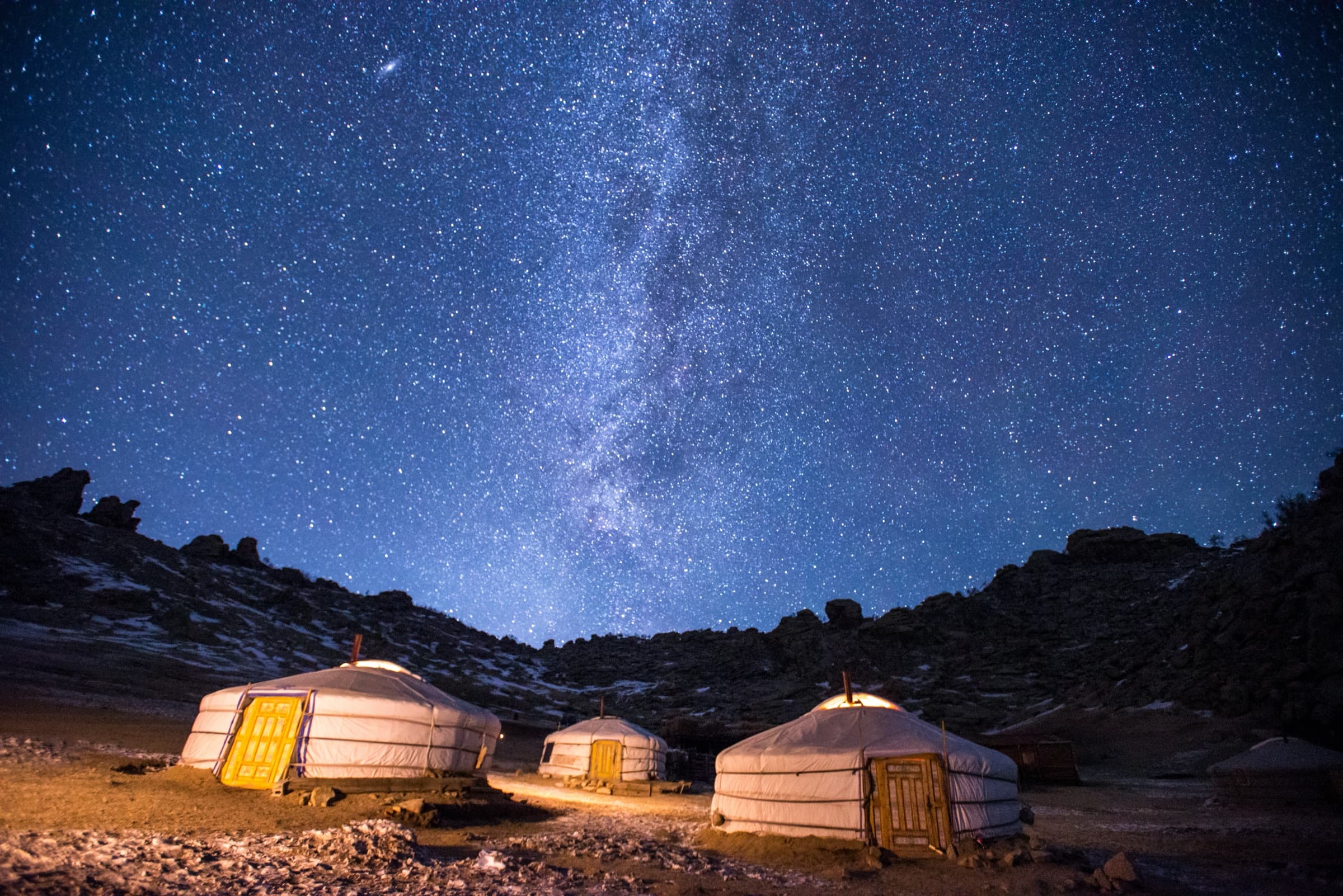
Originally, the first yurts really did look like the tipis found among Native Americans. Called “urts”, they were already in use in 600 BC. Originally, these dwellings were built with wooden poles and animal skins placed side by side.
Urts have evolved over time. In order to improve their liveability, they are now set on a lattice covered with animal skins. As sewing techniques also evolved, the inhabitants of the urts are now able to make large expanses of leather set with strips of rigid fabric in order to hold everything in place.
It has become the traditional dwelling of the nomads of Asia. It is characterised by how easily it can be moved. Mongolian nomads change where they live with every season in order to feed their livestock.
It is a dwelling in which the generations live together. It has a single room arranged around the central wood fire, in which the residents live, eat, sleep, pray.
Benches are arranged in a circle against the walls, a low table often makes it possible to sit down and eat, an altar for prayers and the veneration of ancestors is traditionally placed opposite the door. You walk clockwise, you sit cross-legged, you do not whistle, you do not lean on the walls. The yurt is a highly ritualised space, and many ancestral customs are found there. According to belief, the place is governed by cosmic forces whose balance must not be broken.
The history of yurts evolved along with that of the peoples of the steppe, who spread this structure across the immense horizons of the endless Eurasian steppe and then around the world.
Contemporary yurts are the most modern evolution of this way of living. They bring all the comfort one is entitled to expect from a new house. These are alternative and ecological homes that offer a way of life and an atmosphere more in tune with nature.