The mystery of wolves
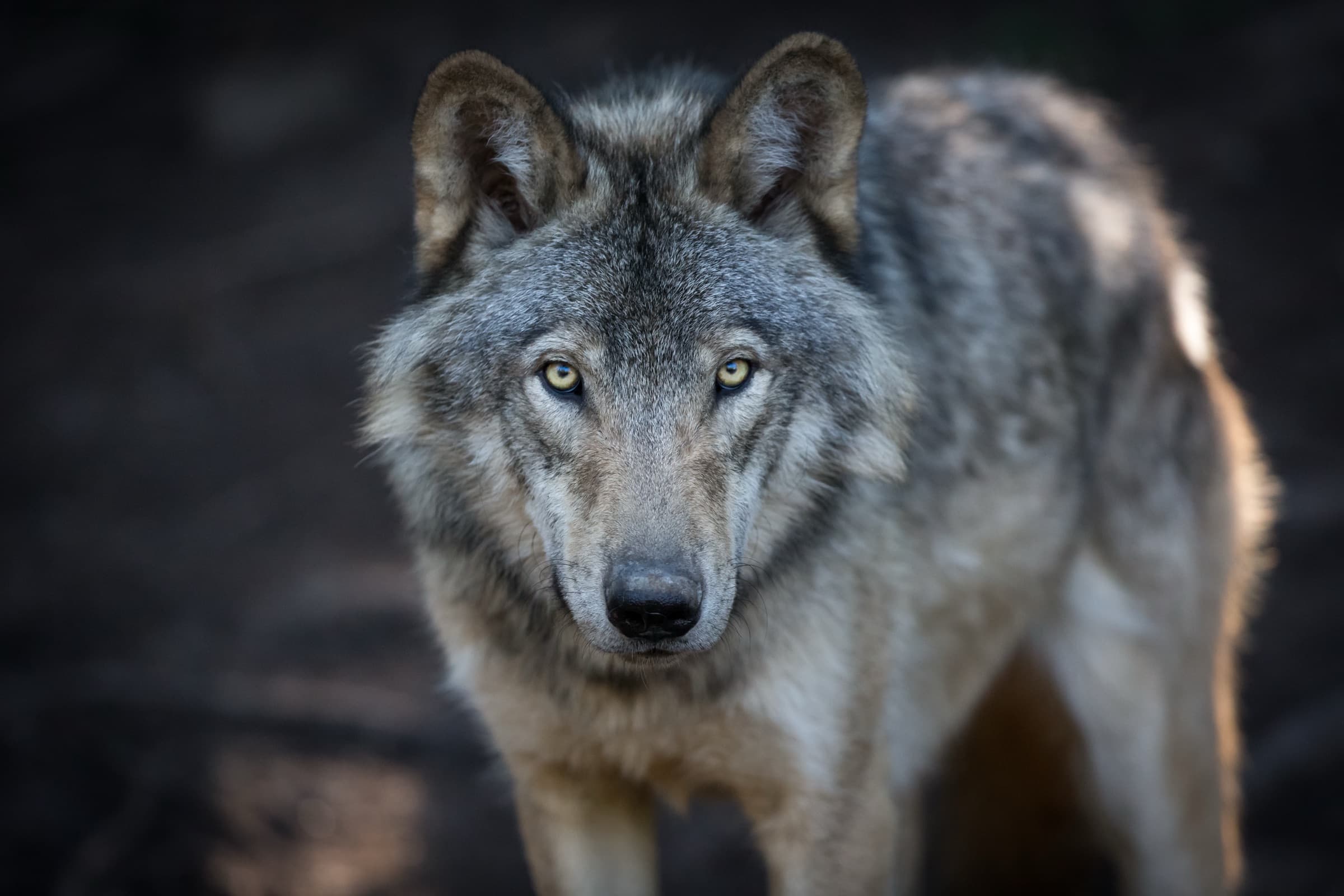
The wolf fascinates us, its wary manner and its threatening approach, its powerful gaze and its unsubmissive nature. It is the symbol of wildlife. Roaming the arid plains in search of game, wandering through the woods and obeying nothing but its instinct. It was hunted for a long time and badly seen by humans.
Today it is being reintroduced into our reality, invited back to live beside us, in the forests, not without the anger of some livestock farmers worried about their animals. We invite you to find out a little more about the wolf and to get to know it.
Learning more in this way about their social behaviour, and its conclusions as to the very nature of the wild wolf have nothing to do with what we long imagined. Against all expectations, the wolf is very close to us in its behaviour. We should even sometimes follow the example of wolves, their way of life and their approach to it not lacking in wisdom. But before coming to them, let us go back over a few received ideas that have long done harm to our friend the wolf.
A WILD AND SOLITARY ANIMAL 🐺
For a very long time, the wolf was thought to be a solitary animal that only gathered with a few of its own kind in the winter period to hunt game as a pack. We now know that the wolf is a fundamentally social animal, the great majority of them live in a pack, which is nothing other than a family.
THE ALPHA WOLF (THE DOMINANT ONE) AND THE OMEGA WOLF (THE DOMINATED ONE OF THE PACK) 🐺
The first 3 are the oldest or the sick ones: they are the ones who set the pace of the group.
They are followed by five strong and powerful wolves, the Beta wolves. The rest of the pack is made up of the Gamma wolves.
At the tail of the procession, well behind, is the Alpha wolf: the pack leader.
From his position, he controls the group, decides which direction to take and anticipates threats. The pack moves at the pace of the elders under the command of the leader, who imposes the spirit of mutual aid and leaves no one behind.
A pack's territory is very large, a pack can cover between 40 and 70 kilometres a day, in order to find a territory better suited to its survival. When a pack sets off in search of another territory, the wolves walk and protect one another, respecting an order established according to the sacred laws of nature to which all animals submit and thus prosper.